

Casting vs. Forging: Why U.S. Manufacturers Are Converting Castings to Forgings
Updated: Jan 8
Why Purchasing Managers Are Choosing Forgings Over Castings and Bringing Manufacturing Back to the U.S.
Across American industry, purchasing managers are reevaluating their supplier base, total cost of ownership, and risk exposure. In this process, many are discovering that parts traditionally sourced as castings could be better made as forgings, especially when produced in the United States.
What began as an engineering conversation has evolved into a comprehensive supply chain strategy. More companies are working to strengthen domestic production and reduce risks associated with offshore suppliers.
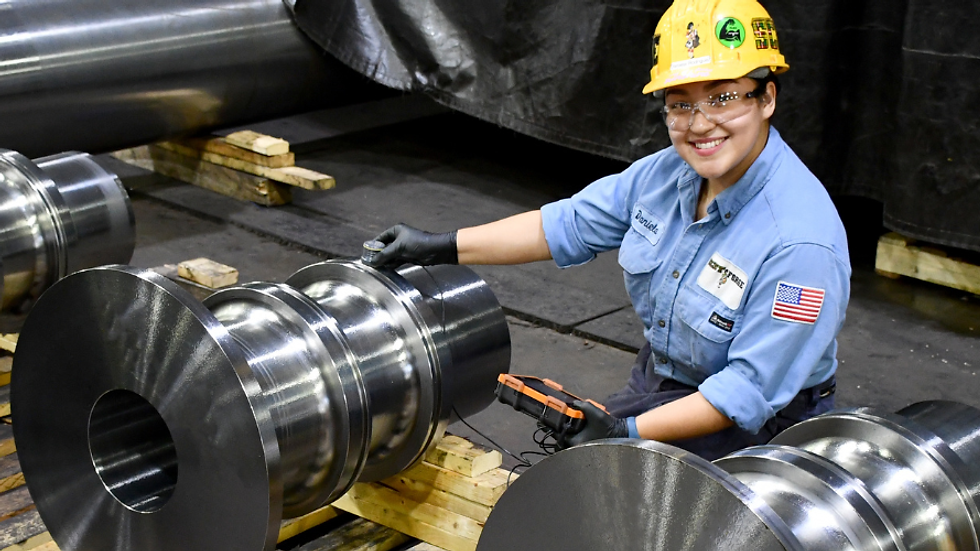
Casting vs. Forging: What’s the Real Difference?
Both processes produce metal components, but the difference in quality and reliability is significant.
Casting melts metal into a liquid and pours it into a mold to form a shape.
Forging heats metal until it becomes malleable, then shapes it under pressure. This process creates a denser, stronger structure with refined grain flow.
Because of this method, forgings exhibit superior mechanical integrity and consistent performance, particularly in mission-critical applications.
Why More Buyers Are Moving Away From Castings
For decades, castings were favored for their ability to create complex shapes and lower up-front tooling costs. However, many purchasing teams are finding that the “savings” on paper do not hold up over the product lifecycle.
Common issues with castings include:
Porosity and inclusions that cause hidden failures or rework
Inconsistent mechanical properties that complicate qualification or testing
Higher scrap rates and repair costs that eat into profit margins
Long overseas lead times that disrupt production schedules
Forgings address these problems before they arise. The forging process compresses and aligns grain flow, virtually eliminating porosity and internal defects. The result is stronger, more predictable parts and fewer supply chain surprises.
Near-Net-Shape Forging Opens New Possibilities
Historically, some parts were too complex to forge. That has changed.
What used to require casting can now be forged using modern near-net-shape techniques. Parts can be produced more efficiently, using less material and reducing overall costs.
Advances in simulation and process control also help reduce material waste, improve turnaround, and provide better cost visibility throughout production.
Forgings Strengthen Domestic Supply Chains
Domestic supply chain resilience has become a top priority for procurement teams across industries. By converting critical parts from castings to forgings and sourcing them domestically, purchasing managers can:
Reduce supply chain risk from geopolitical and logistical disruptions
Shorten lead times and improve on-time delivery
Eliminate dependency on overseas vendors
Support U.S. manufacturing and workforce stability
Increase traceability and accountability throughout the supply chain
These benefits are not just patriotic; they are practical procurement wins that protect budgets, schedules, and reputations.
Questions Every Purchasing Manager Should Ask
If you are evaluating whether a casting could be converted to a forging, start with a few key questions:
Are you experiencing high scrap or repair rates?
Do inconsistent properties create performance or warranty risks?
Is the component mission-critical or safety-critical?
Could local sourcing reduce lead times or quality issues?
Do you have design authority or flexibility to adjust geometry?
A qualified metal forming partner can help assess feasibility, provide comparative cost models, and estimate potential lifecycle savings.
The Bottom Line: Forgings Deliver Long-Term Value
While the piece price of a forging may appear higher than that of a casting, the total cost of ownership tells a different story.
Fewer failures. Less scrap. Shorter lead times. Stronger supply chain control.
That is why purchasing managers across defense, energy, mining, and industrial sectors are moving key components to U.S.-made forgings and not looking back.
At Scot Forge, our employee-owners partner with customers to review parts for casting-to-forging conversion, reduce total cost, and strengthen domestic supply chains. With in-house metallurgists, forge engineers, and testing capabilities, we are equipped to make your sourcing decisions more confident than ever.
Contact us today to evaluate your component and see if a forging is the right fit.
The Future of Forgings in Manufacturing
As we look ahead, the role of forgings in manufacturing will continue to grow. The increasing demand for high-quality, reliable components will drive innovation in forging techniques. Companies will invest in advanced technologies to enhance production efficiency and reduce costs.
Embracing Sustainability in Forging
Sustainability is becoming a crucial consideration in manufacturing. Forging processes can be more energy-efficient compared to casting. By reducing waste and optimizing material usage, forgings can contribute to a more sustainable manufacturing environment.
Building Stronger Partnerships
The shift from castings to forgings is not just about cost savings; it's about building stronger partnerships. By collaborating closely with suppliers, purchasing managers can ensure that they receive the best possible products and services. This collaboration fosters innovation and drives continuous improvement.
Conclusion: A Strategic Shift Towards Forgings
In conclusion, the strategic shift towards forgings represents a significant opportunity for purchasing managers. By embracing this change, companies can enhance their supply chains, improve product quality, and achieve long-term cost savings. The future of manufacturing lies in the strength and reliability of forgings, and it’s a journey worth taking.



It’s fascinating to see U.S. manufacturers moving from castings to forgings—clearly, the benefits in strength and reliability are driving this shift. I’ve been exploring ways to improve operational efficiency in industrial processes, and understanding the nuances between these methods really opens my eyes to smarter choices. Ensuring precision and reducing defects seems more critical than ever, especially with complex supply chains. That’s one of the reasons I rely on professional digital solutions for manufacturing insights, like the ones offered by https://da-com.com/, which help integrate data-driven strategies while maintaining top-notch quality control.